Work & projects

Energy systems engineering, thermodynamic modelling and empirical research: two BauSim 2026 publications, ongoing district heating analysis at INATECH, heat-pump decarbonisation, and the mechanical engineering design work that came before.

Publications

Publication · Peer-reviewed conference paper, BauSim 2026, Zürich

Assessing CHP Systems for Primary Energy Efficiency, CO₂ Emissions and Grid Support

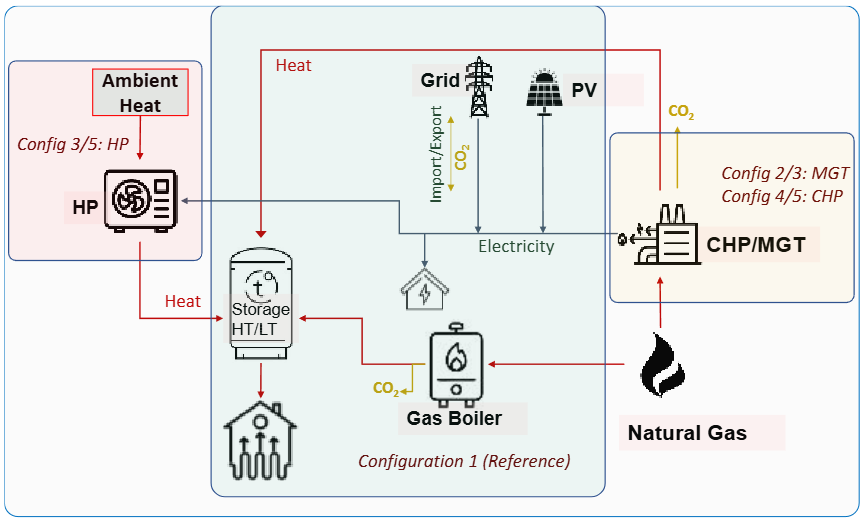
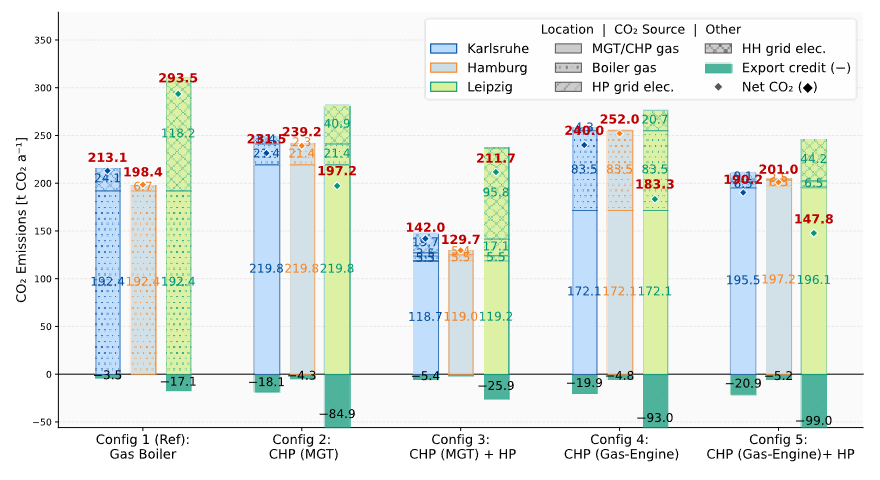
With colleagues at INATECH and Fraunhofer ISE, I co-authored this paper on combined heat and power (CHP) for the Smart District Karlsruhe-Durlach, a group of five multi-family buildings with minute-level monitoring data for 2024. We simulated five supply systems hour by hour (a gas boiler reference, micro gas turbine and gas-engine CHP, each with and without a heat pump, all with PV) at three German locations: Karlsruhe, Hamburg and Leipzig.

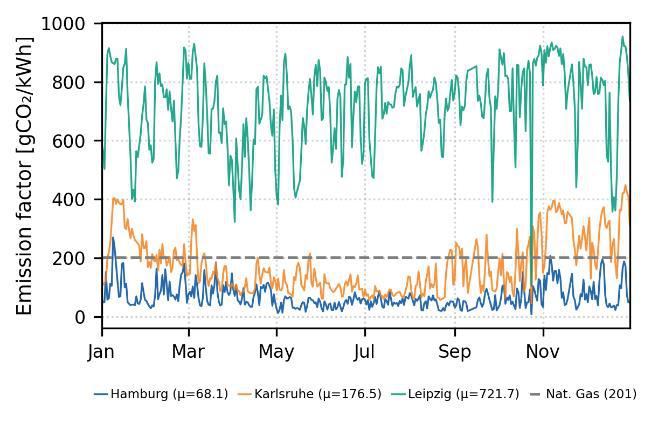
The CO₂ benefit of CHP depends on the local grid far more than on the technology: the same micro gas turbine cut emissions by 32.8% in coal-heavy Leipzig but raised them by 8.7% in Karlsruhe. Adding a heat pump reduced emissions everywhere, by up to 50% in Leipzig. The EU Ecodesign primary-energy metric misses these location effects, so we argue for location-sensitive CHP assessment.

Authors
M. Kropp, S. Pathak, S. Naderi, G. Füldner, A. Velte-Schäfer
Published in
Proceedings of BauSim 2026 (IBPSA-Germany, Austria and Switzerland), pp. 265–272
Methods
Hourly dispatch simulation, CO₂ and primary-energy assessment, grid support coefficients
Tools
Python, EHDO
System diagram with heat pump, CHP or micro gas turbine, gas boiler, PV, grid and heat storage, with heat, electricity and CO2 flows
System model for the five configurations.
Stacked bar chart of annual CO2 emissions by source for five configurations in Karlsruhe, Hamburg and Leipzig
Annual CO₂ emissions by source and location.
Daily grid emission factors over 2024 for Hamburg (mean 68), Karlsruhe (177) and Leipzig (722 grams CO2 per kWh)
Grid CO₂ intensity: Hamburg, Karlsruhe, Leipzig.

Publication · Technical paper (in German), BauSim 2026, Zürich

Hybrid Heat Pumps and CHP in Existing Multi-Family Buildings: Three Years of Monitoring Data

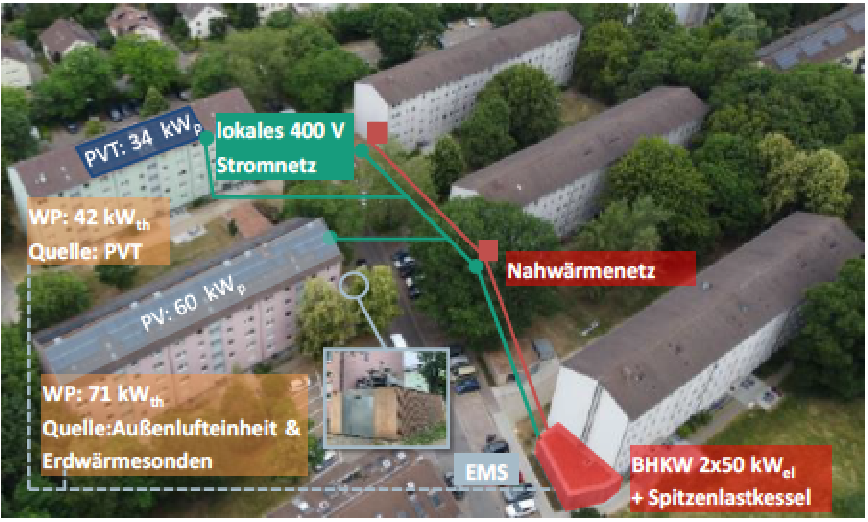
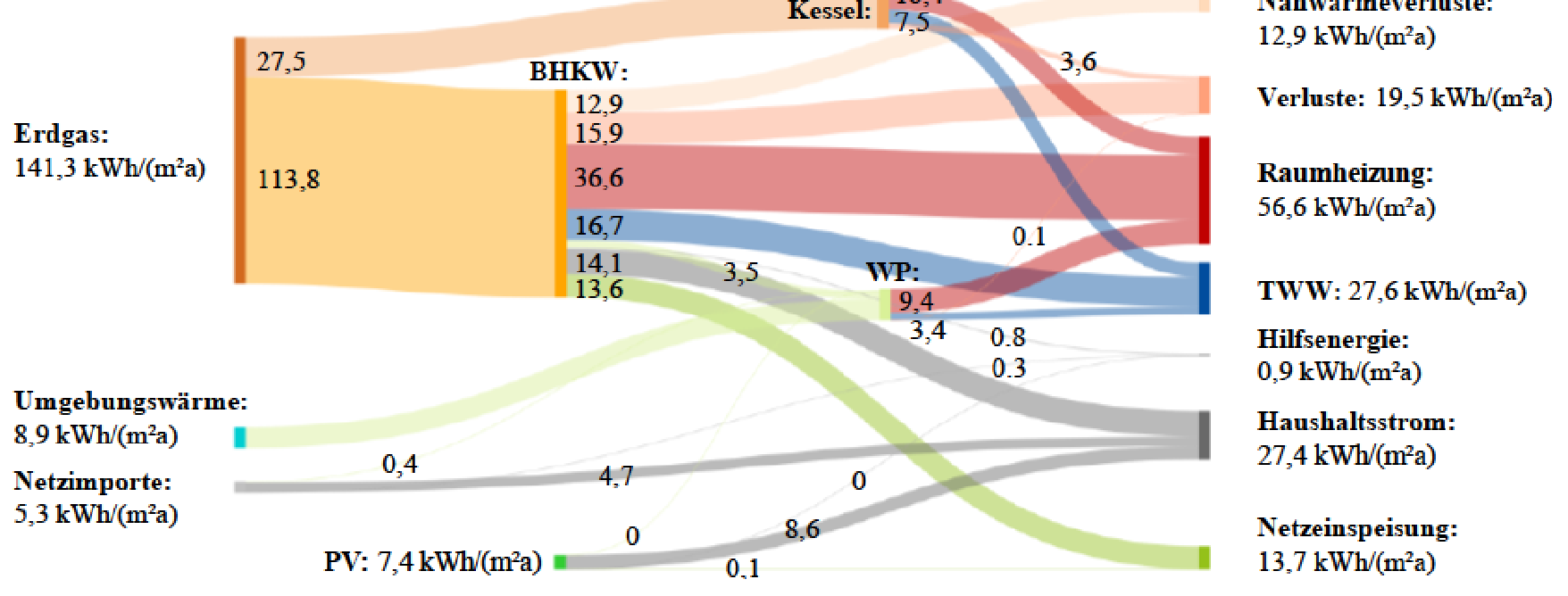
Our second BauSim 2026 paper, with Michael Kropp and Andreas Velte-Schäfer, evaluates the real operation of the Smart District Durlach: five 1960s multi-family buildings (11,243 m²) supplied by two hybrid heat pumps (one using PVT collectors, one combining ground probes and outdoor air), two 50 kW gas CHP units, PV, a local 400 V grid and a district heating network. Over 700 monitoring points give the 2025 energy balance, compared with 2023 and 2024.

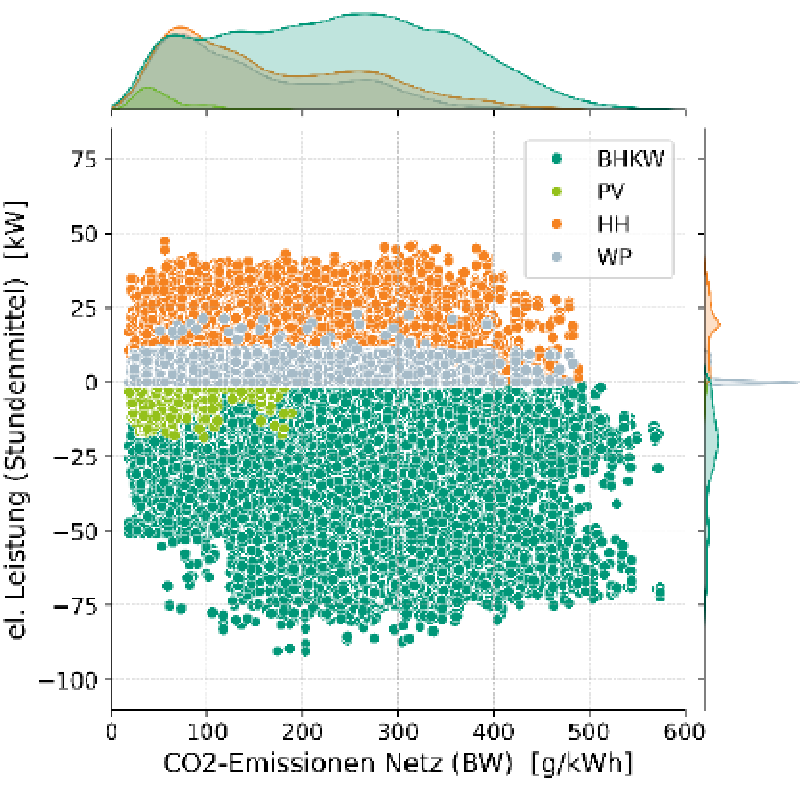
The district produced 83% of its own electricity and over 90% of the heat pumps’ winter power came from the CHP units. It was grid-supportive both when importing and exporting (GSC 0.64 and 1.28). The CO₂ result depends on how the grid is counted: up to 22% savings with Germany’s average mix and export credits, but up to 5.7% more emissions on Baden-Württemberg’s cleaner grid without credits, which is why we propose running the CHP according to grid CO₂ intensity.

Authors
M. Kropp, S. Pathak, A. Velte-Schäfer
Published in
Proceedings of BauSim 2026, pp. 57–65, doi:10.21256/zhaw-2860
Data
700+ sensors, 1-minute resolution, 2023–2025
Original title
Analyse und Bewertung von hybriden Wärmepumpensystemen in Kombination mit Kraft-Wärme-Kopplung im Mehrfamilienhaus-Bestand anhand von Monitoringdaten
Aerial photo of the five buildings with PVT, PV, the two heat pumps, the CHP units, the local grid and the heating network marked
Energy concept of the district (photo: Fraunhofer ISE).
Sankey diagram of the 2025 energy flows from gas, ambient heat, grid imports and PV to space heating, hot water, household electricity, losses and grid export, in kWh per square metre and year
Measured energy flows in 2025 (kWh/m²a).
Scatter plot of hourly electrical power of CHP, PV, households and heat pumps against the CO2 intensity of the Baden-Württemberg grid
Hourly power flows vs. grid CO₂ intensity.

Research & projects

Energy systems · INATECH, University of Freiburg

District Heating Performance Analysis

As a Student Assistant at INATECH (Department of Sustainable Systems Engineering, University of Freiburg), I monitor and evaluate operational energy consumption and thermodynamic efficiency across district heating systems. The workflow centres on Python-based analytical pipelines: handling large sensor time-series datasets, identifying metering anomalies and modelling temperature regimes.

The core objective is characterising building–network interactions: quantifying distribution heat losses, assessing substation delta-T degradation, and pinpointing underperforming hydraulic segments for network optimisation.

Period
Feb 2025 – present
Role
Student Assistant
Tools
Python, pandas, time-series analysis
Focus
Heat losses, substation performance

Research · M.Sc. project, University of Freiburg

Heat-Pump Emissions Under Variable Grid CO₂ Intensities: A Regional Study for Germany with PV and CHP

An academic research project completed as part of my M.Sc. programme at the University of Freiburg, alongside my work at INATECH. The study examines how the operational CO₂ emissions of heat pumps change as the carbon intensity of the electricity grid varies, both over time and between regions of Germany.

The analysis includes the effects of photovoltaic (PV) generation and combined heat and power (CHP), which both shape grid carbon intensity at different times and places. It addresses a key question of the energy transition: under what grid conditions do heat pumps actually deliver emission savings over fossil alternatives, and how does that vary by region and season?

Type
M.Sc. academic project
Region
Germany
Scope
Grid CO₂ intensity, PV and CHP
Topics
Heat pumps, decarbonisation

Energy system modelling · M.Sc. course project, University of Freiburg

System Requirements for High-Renewable Energy Grids: A Comparative Study

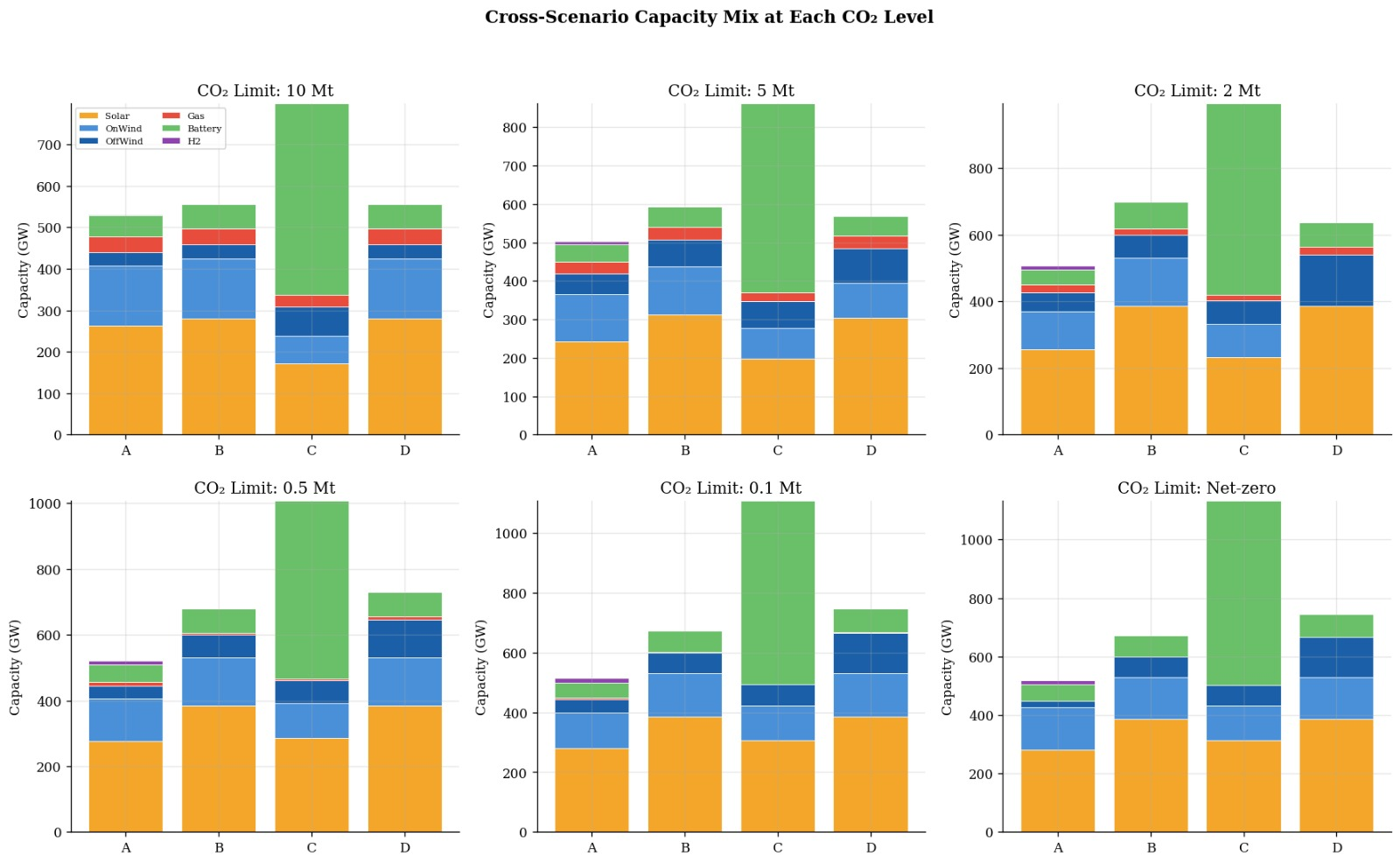
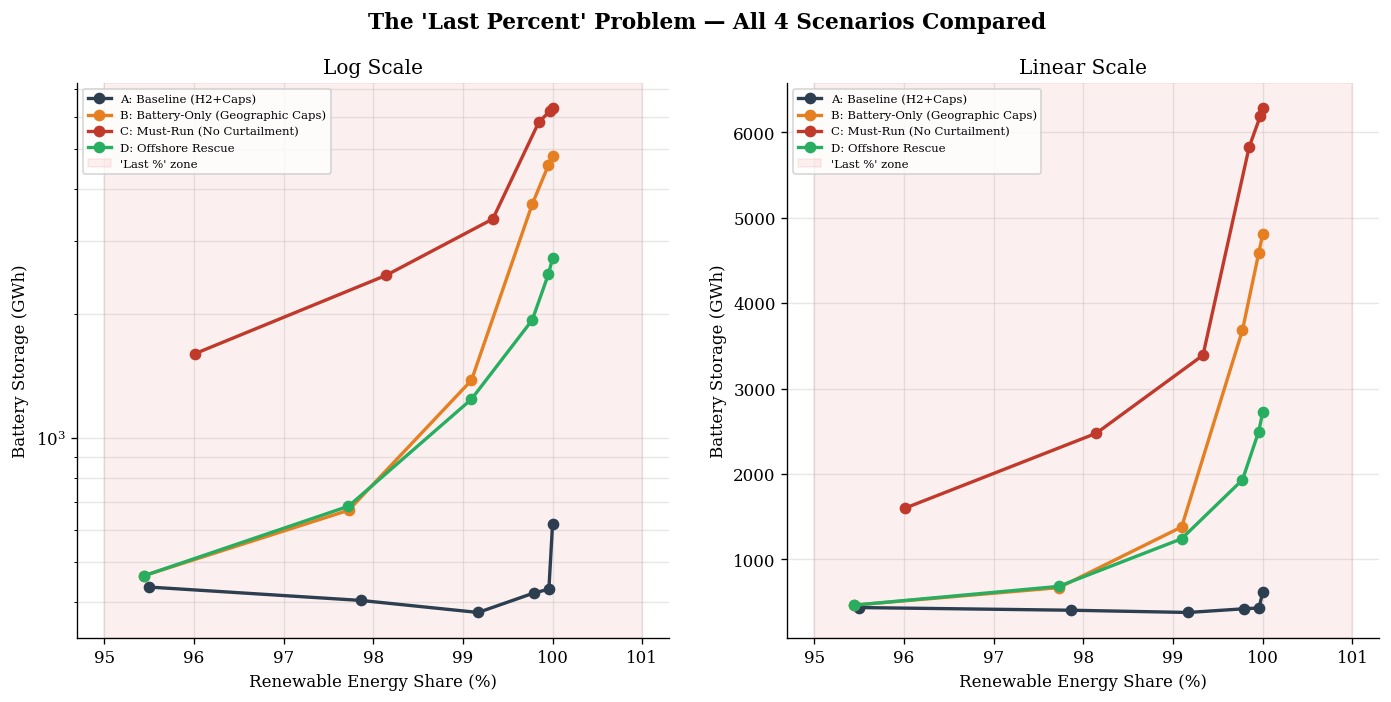
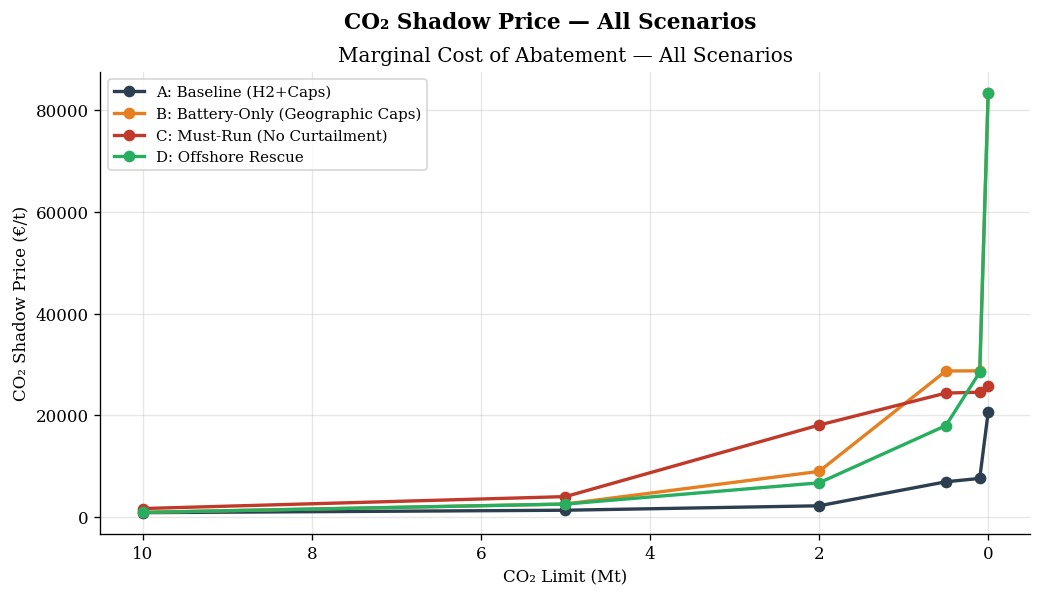
With Mohammad Mahdi Gordali, I built a single-node PyPSA model of the German power system to see what it takes to go from 80% to 100% renewable electricity. It optimises the least-cost mix of solar, wind, batteries, hydrogen and gas over every hour of 2024, under four storage and curtailment scenarios and a CO₂ cap tightened from 10 Mt to net-zero (24 model runs).

Net-zero was reachable in every scenario, but system costs differed 2.4× (€135 vs €318/MWh). Hydrogen as seasonal storage was the biggest lever, and allowing curtailment cut storage needs sharply, showing that Sinn’s (2017) pessimistic storage estimate rests on a no-curtailment assumption.

Type
M.Sc. course project, Energy System Modelling with Python
Co-author
Mohammad Mahdi Gordali
Methods
Linear optimisation, hourly dispatch, CO₂ sweep
Tools
Python, PyPSA, HiGHS
Six stacked bar charts of installed capacity in scenarios A to D at CO2 limits from 10 Mt to net-zero
Installed capacity per scenario as the CO₂ cap tightens.
Battery storage needed against renewable share, rising steeply near 100% in all battery-only scenarios
The ‘last percent’: storage needs rise steeply near 100%.
CO2 shadow price for four scenarios, rising sharply as the limit approaches net-zero
CO₂ shadow price climbs towards net-zero.

Research · M.Sc. term paper, University of Freiburg

Lead in Car Batteries: A Dynamic Material Flow Analysis of the Global Lead-Acid Battery Cycle

With Arun Bansal: a dynamic material flow model of the global lead-acid battery cycle from 2000 to 2025, with EV scenarios to 2040, built in Python and STAN. Published in full on my writing page.

Co-author
Arun Bansal
Tools
Python, STAN

Simulation · Resilience of Supply Networks, University of Freiburg

Two-Lane Traffic and Resilience: A Nagel–Schreckenberg Cellular Automaton

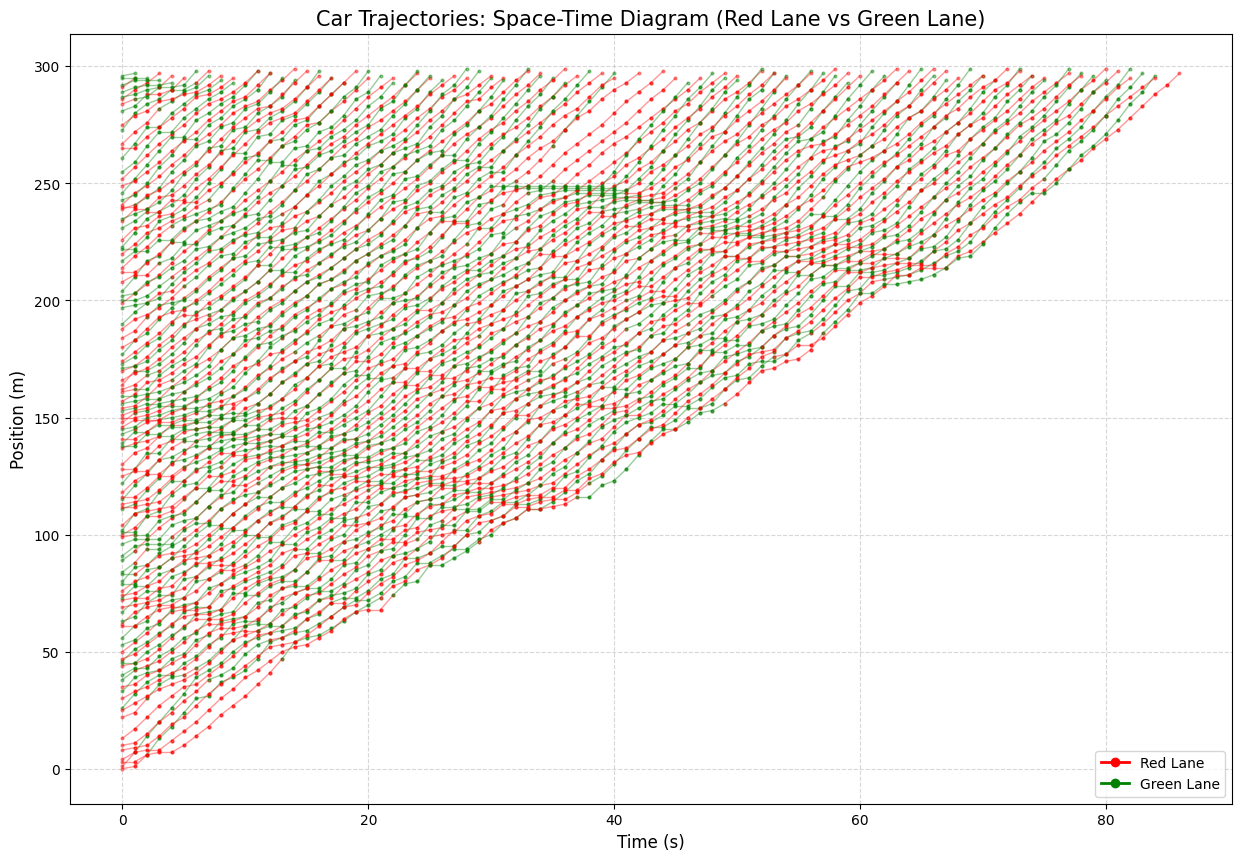
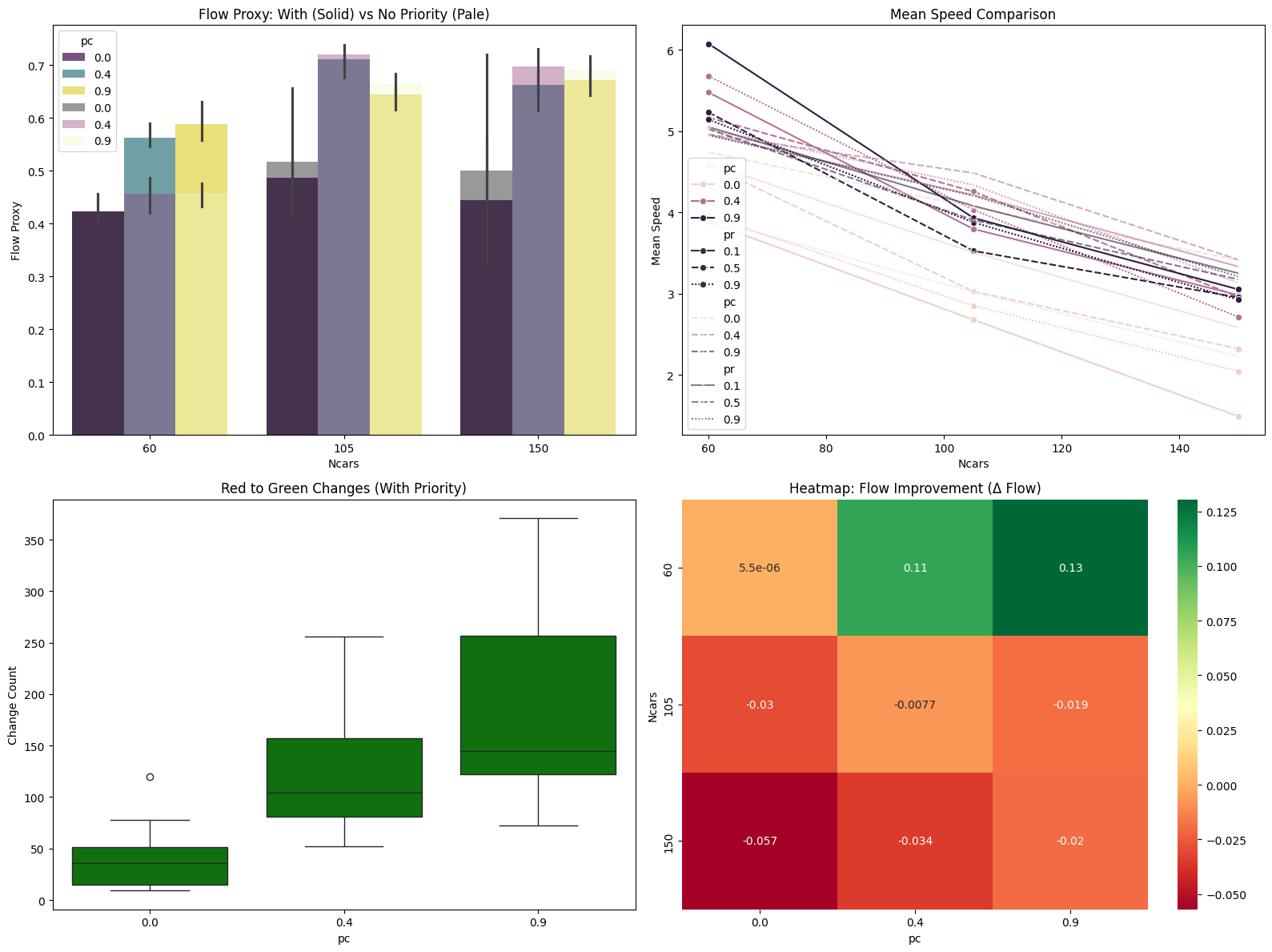
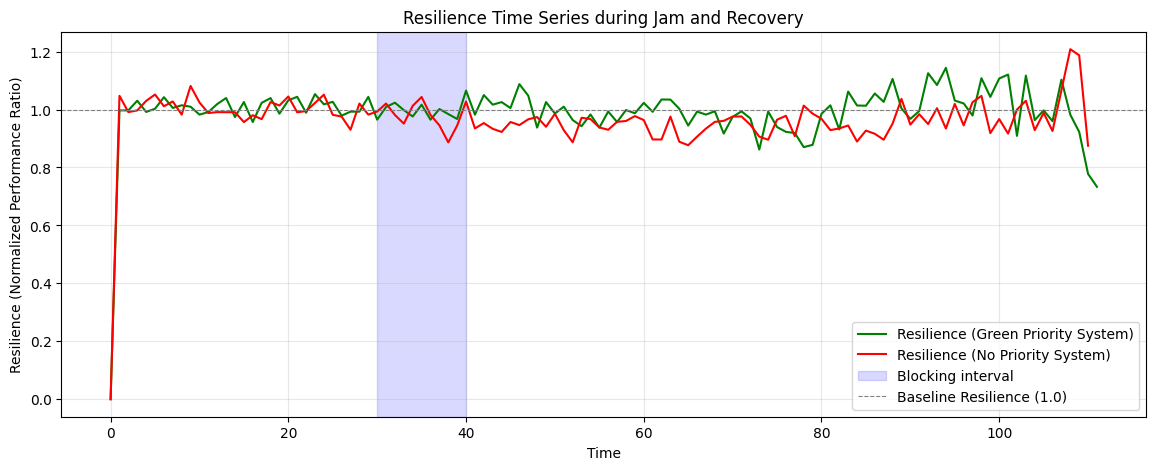
With Ansh Tak and Mahsa, I extended the Nagel–Schreckenberg traffic model to two lanes with lane changing, then ran parameter sweeps over lane-change probability, the number of cars and the initial lane split. I added a “green-lane priority” rule that turns one lane into a fast lane, and simulated a 10-step lane closure to see how traffic jams form and how the system recovers.

Lane changing and the fast-lane rule raised traffic flow on a lightly used road (up to about +0.13 in the flow measure), but gave no benefit, or a slight loss, once the road was crowded. After the closure, the priority system recovered slightly faster, which we quantified with a time-resolved resilience metric.

Type
M.Sc. course project, Resilience of Supply Networks
Co-authors
Ansh Tak, Mahsa
Model
Cellular automaton, agent-based
Methods
Parameter sweeps, resilience metrics
Tools
Python, pandas, Matplotlib, Plotly
Space-time diagram of cars on red and green lanes, showing a jam forming near position 250 when the green lane is blocked
Space–time diagram: a jam forms behind the lane closure.
Four panels comparing flow, mean speed, lane changes and flow improvement with and without green-lane priority
Green-lane priority helps light traffic, not heavy traffic.
Resilience time series for systems with and without green priority, dipping during the blocking interval from time 30 to 40
Resilience during the closure and recovery.

Building energy · Case study, Nepal

Earthquake-Resistant Building: Passive & Active Thermal Retrofit Strategies

A case study of thermal retrofitting strategies for earthquake-resistant buildings in Nepal. It analyses passive and active retrofit approaches and their impact on building energy performance and thermal comfort.

Passive strategies assessed include insulation improvements, window upgrades and air-tightening. Active strategies include mechanical heating and cooling systems. The study compares both approaches in the Nepali climate context.

Plot of simulated indoor temperature for the retrofit study

Thermal systems · Kathmandu University

Design & Analysis of a Low-Temperature Refrigeration System

Design, thermodynamic analysis and performance evaluation of a low-temperature refrigeration system: system sizing, vapour-compression cycle analysis, and selection of the compressor, condenser, expansion valve and evaporator.

The analysis covers COP calculations, heat load assessment and refrigerant selection. Published on ResearchGate as part of my undergraduate research at Kathmandu University.

Exploded CAD view of the insulated cold box

Working on something similar?

I’m open to thesis collaborations and roles in energy systems across Germany and Europe.

Get in touch